Product release notes - May 2026
May extends what teams can build on Port: a public plugins repo opens the ecosystem to community use and contribution, Workflows gain multiple triggers and richer placement controls, and two new integrations bring Claude Code and Copilot activity directly into Port.


May extends what teams can build on Port: a public plugins repo opens the ecosystem to community use and contribution, Workflows gain multiple triggers and richer placement controls, and two new integrations bring Claude Code and Copilot activity directly into Port. The new sidebar layout (opt-in beta) rounds out the release, designed for teams switching between building and operating.
Big
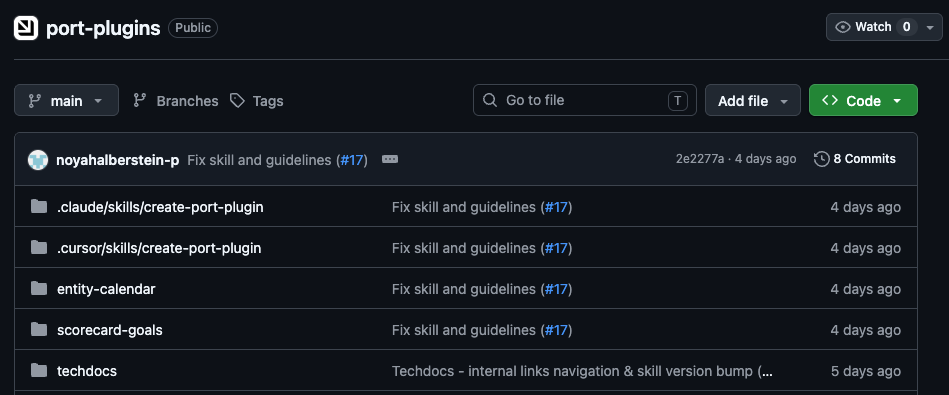
Public Port-Plugins Repository
The port-plugins repo is now available. Use Port's plugins as-is or customize them for your specific needs.
What's included:
- Plugin-creation skill - AI-powered skill for building and customizing plugins
- Entity Calendar Plugin - timeline visualization for catalog entities
- TechDocs Plugin - in-Port technical documentation viewer with setup guide
- And more.
We'll continue adding more plugins. Early step toward a broader plugin ecosystem.
The new UX layout - opt-in beta available
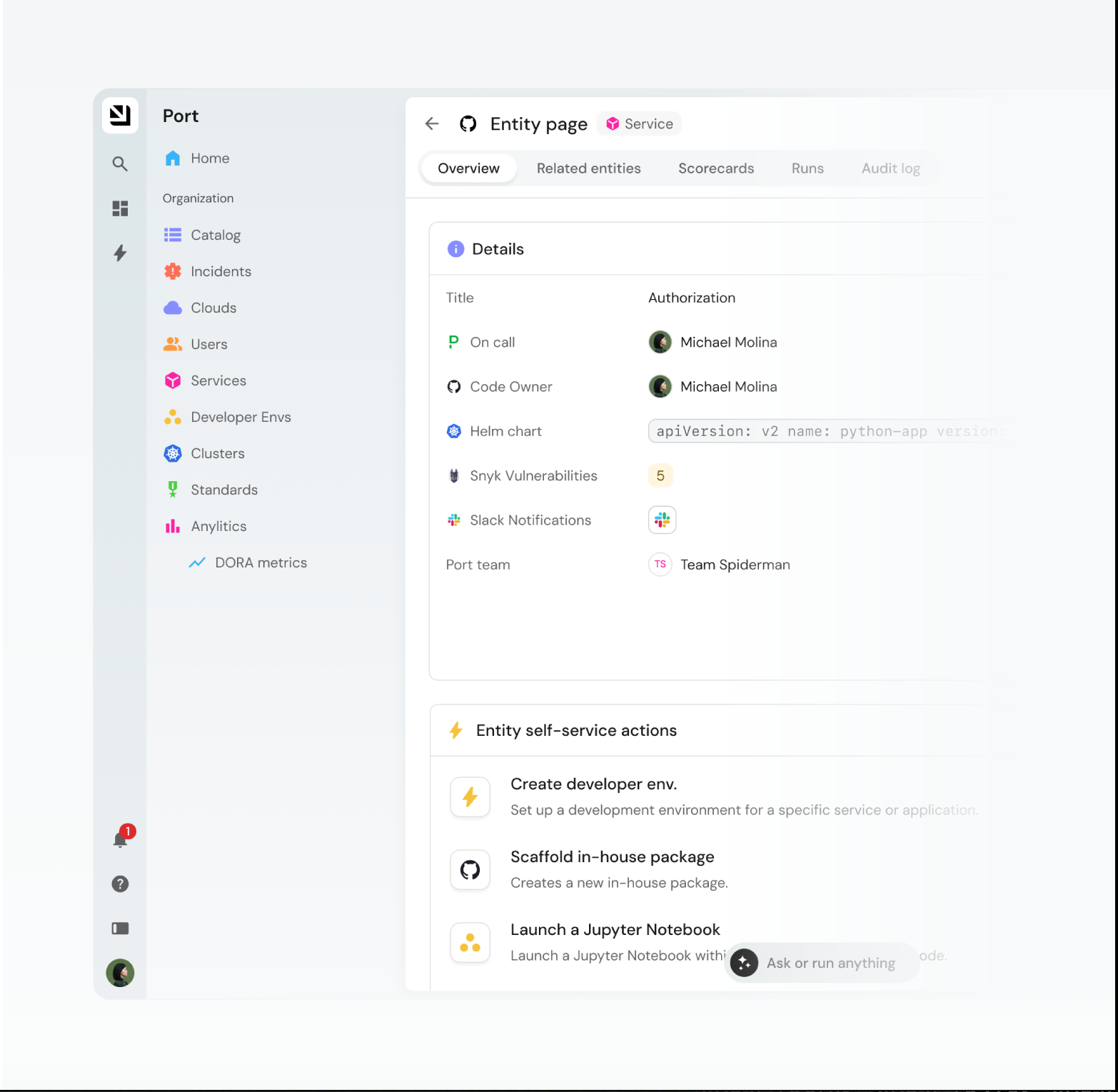
When teams start building more workflows, automations, and agentic capabilities in Port, a top nav stops scaling. The sidebar keeps building and operating in the same view, without constant context-switching.
For developers and engineers: Your services, workflows, actions, and search are always reachable from the sidebar. It collapses when you need the space back.
For platform builders and admins: Switch between operating and builder modes directly from the sidebar. Data model, data sources, workflows, automations, and org settings are grouped under Setup, separate from your day-to-day view.
Admins can enable the new layout in Organization Settings.
Medium
Work across multiple organizations in parallel with org-aware deep links
Each browser tab now holds its own org session, and Port URLs carry org context so shared links always land in the right place.
Open each org in its own tab and sessions stay fully isolated - filters, drafts, and UI state never bleed across. Port URLs now embed your org ID, so any link you share opens the right org and screen for the recipient, even if they need to sign in first.
Add multiple triggers to a single workflow
Define multiple entry points in one workflow and mix self-service and event-driven triggers without duplicating workflow definitions.
Add multiple trigger nodes to your workflow's JSON configuration, then use .outputs.trigger to reference whichever trigger fired at runtime, or target a specific trigger by its identifier. Permissions are configured per trigger node, so different entry points can carry different access controls.
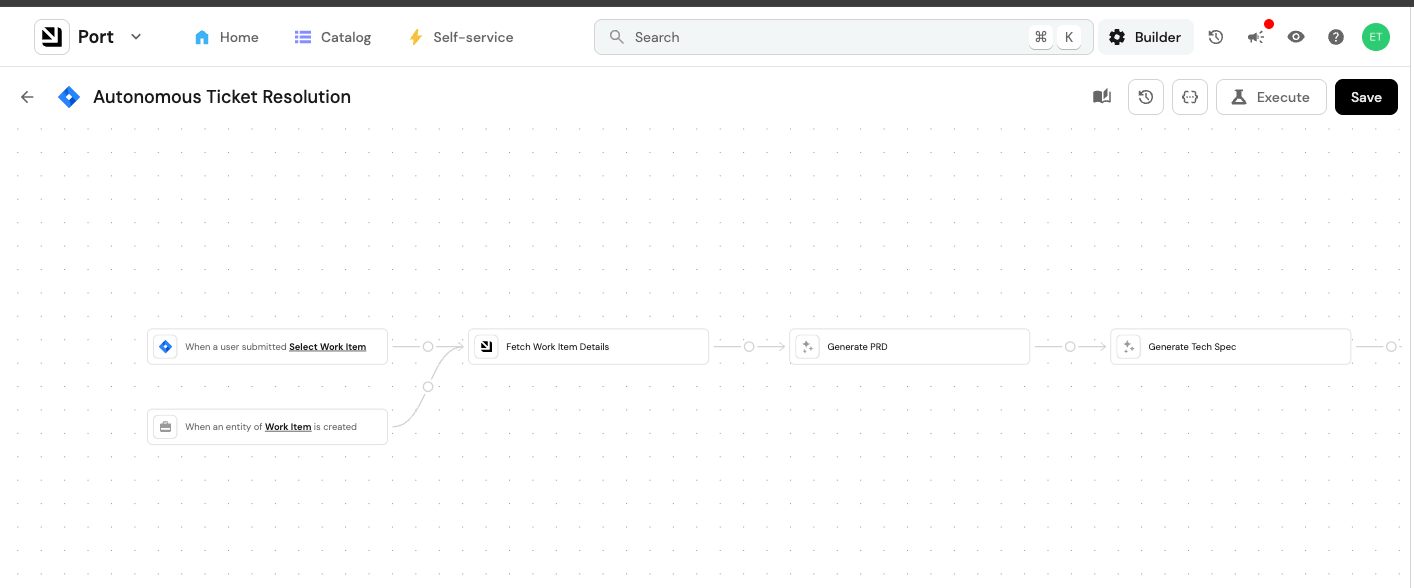
Configure Port Workflow categories
Control how triggers and workflows are grouped and displayed across Port - in the bolt menu, the self-service hub, and the workflows builder page. Use category to group related workflows under named sections
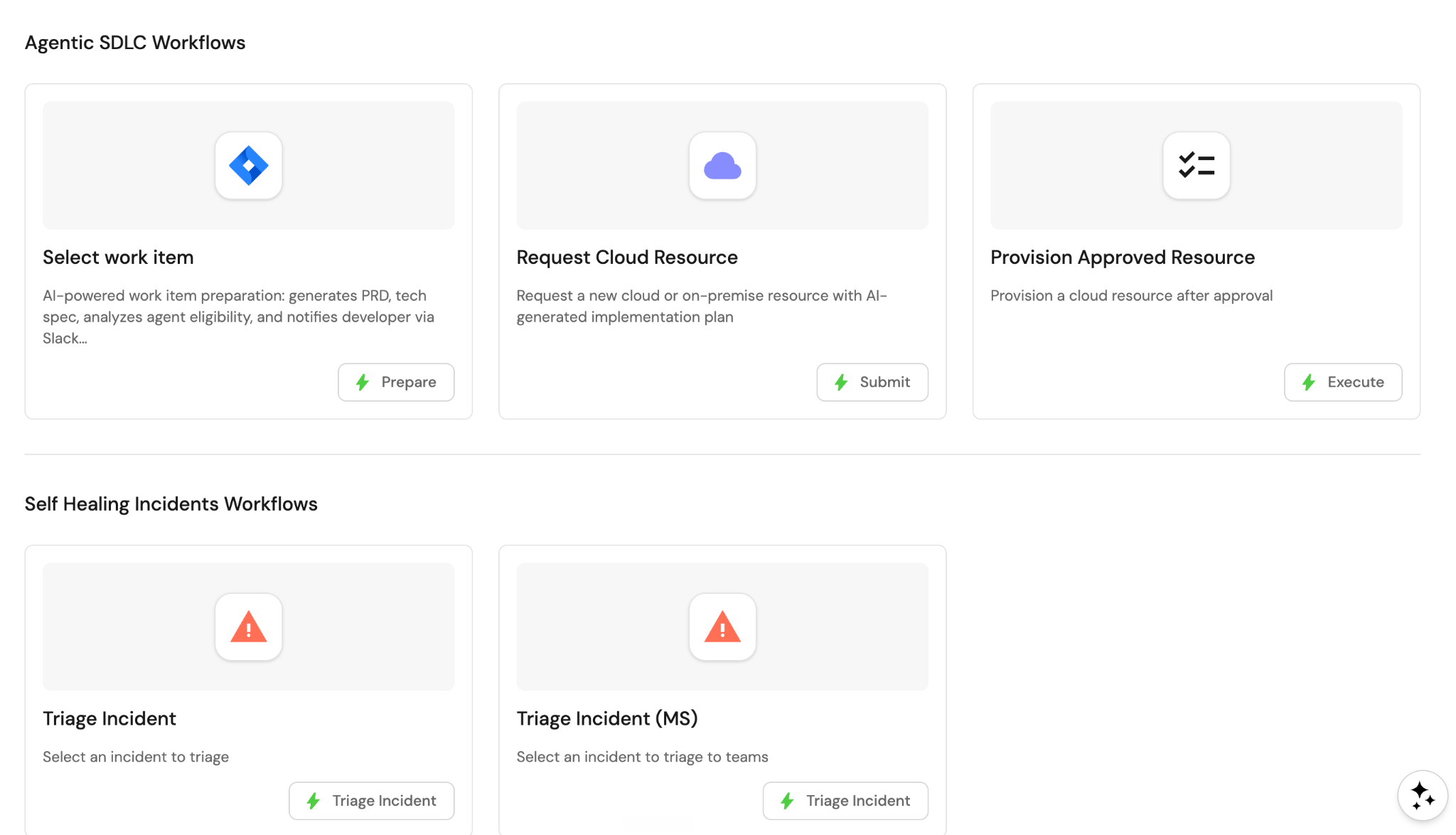
Configure Port Workflow trigger contexts
Bring self-served Port Workflow triggers directly to the places your users already work.
Control where self-service Port Workflow triggers appear in Port's UI, how they're grouped in the bolt menu and their display variant - all from the trigger node config.
Set contexts to surface triggers on entity rows, pages, or the 'Create entity' form. Use category to group related triggers under named bolt-menu sections, and variant: ALERT to apply red destructive styling for deletion or rollback operations.
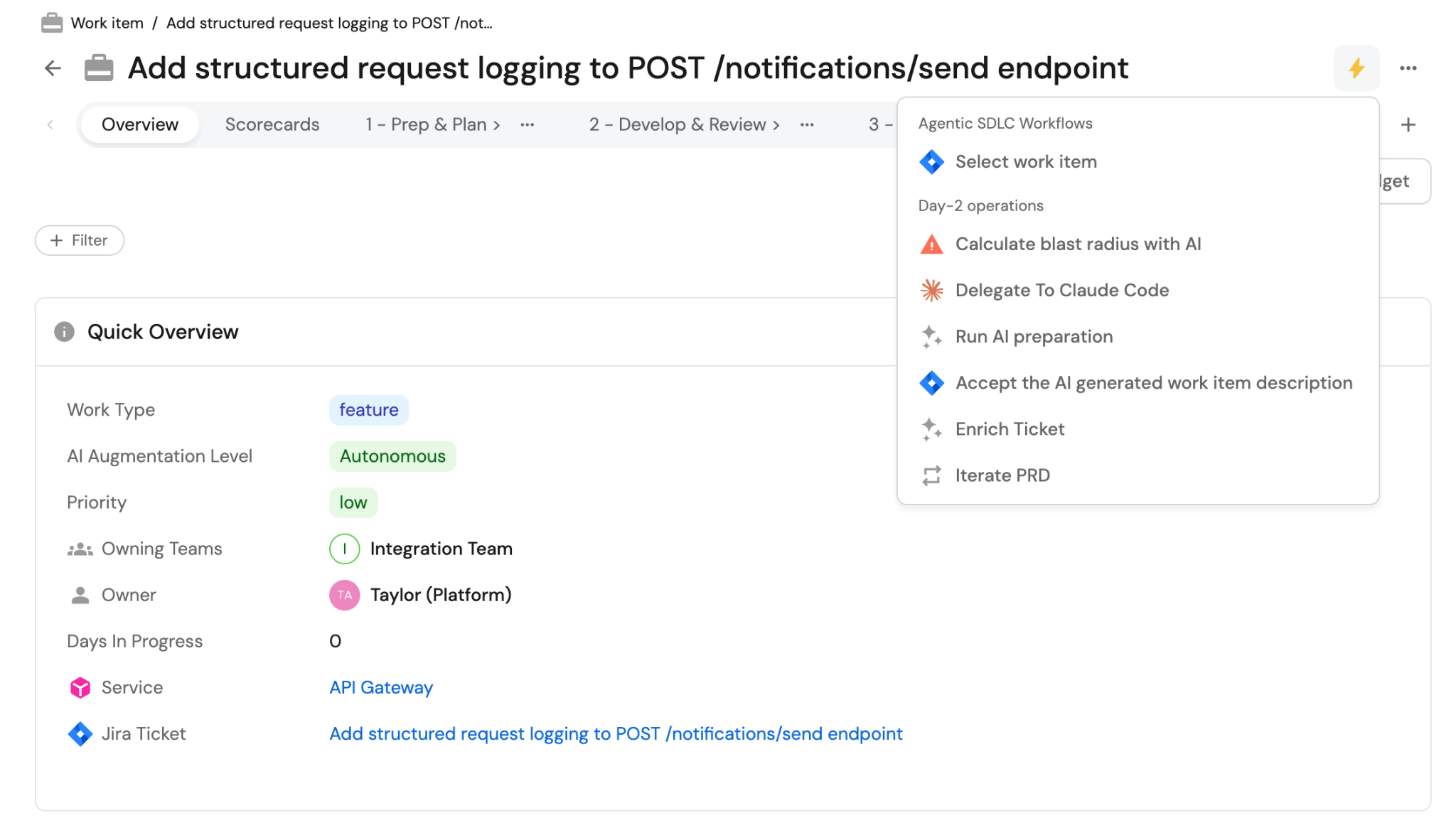
Use Secret Inputs with GitHub Ocean and Port Execution Agent Polling Actions
Encrypted action inputs now work with GitHub Ocean SSA and Port Execution Agent in Polling mode.
If you're migrating from the GitHub App to GitHub Ocean, or running Port Execution Agent in Polling mode, you can now pass encrypted inputs, like API keys or tokens, directly in your action workflows.
Track permission changes for Actions and Blueprints in the Audit Log
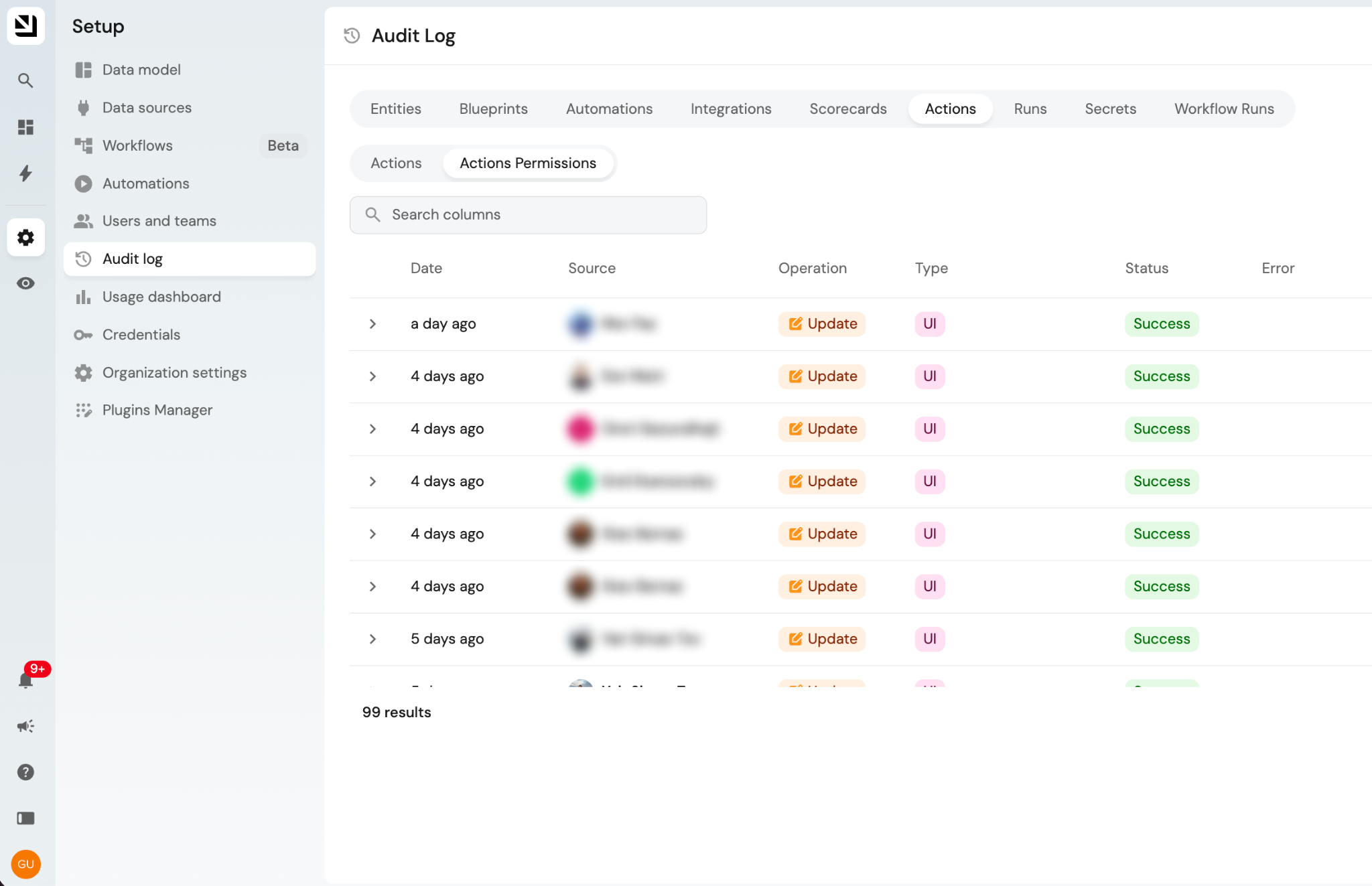
Permission changes for Actions and Blueprints are now fully captured in Port's Audit Log, giving compliance teams a complete and attributable access control history.
In the Audit Log, new sub-tabs under Actions (Actions Permissions) and Blueprints (Blueprint Permissions) let you trace every permission change, who changed what and when. Meets SOC2 and similar compliance requirements out of the box.
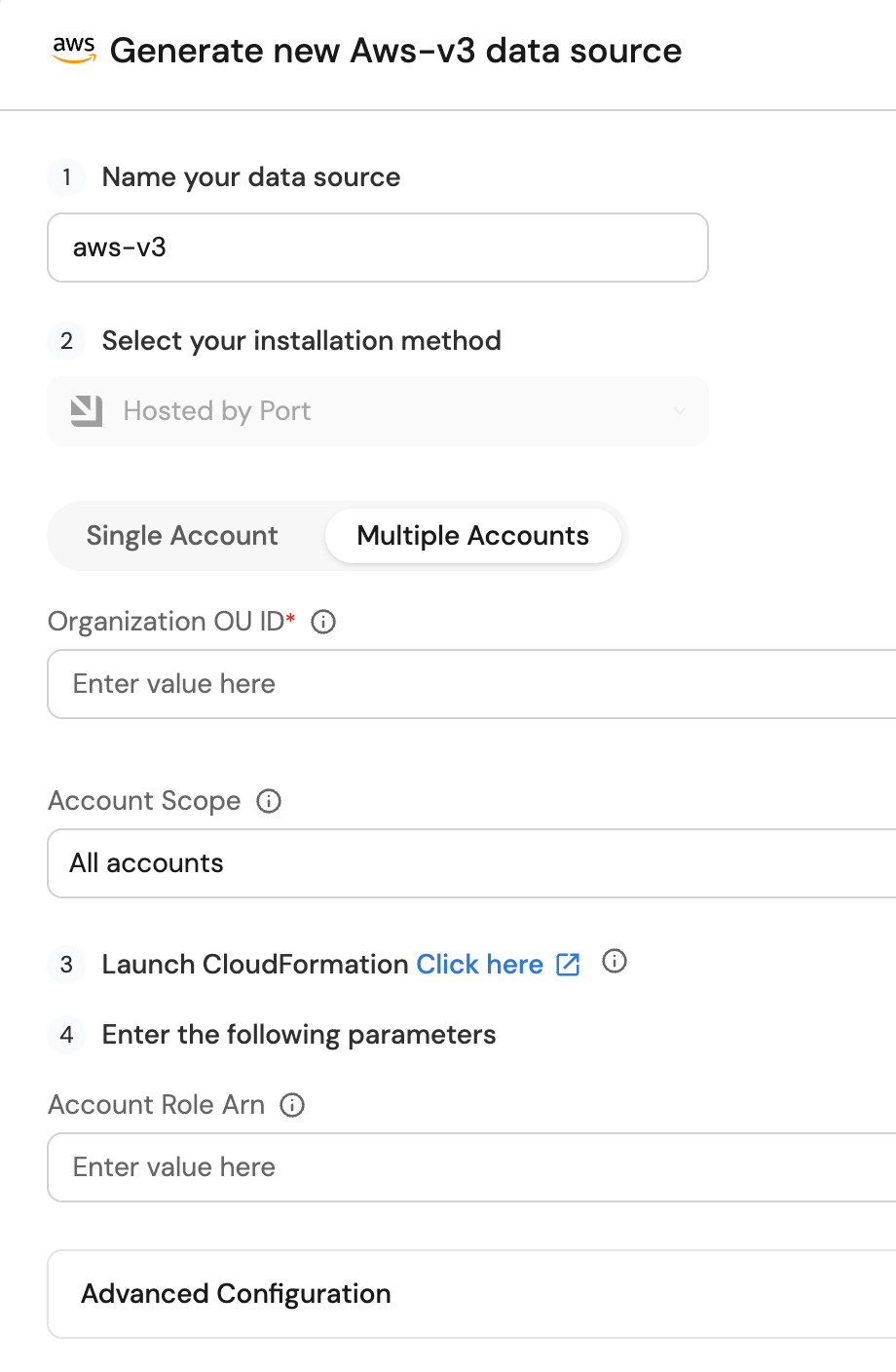
Azure DevOps multi-organization support
The Azure DevOps integration now supports syncing multiple organizations from a single integration instance. Enterprises running several ADO organizations under one Microsoft Entra tenant no longer need a separate integration per org - one deployment handles them all, concurrently. The integration also introduces Service Principal authentication (via Microsoft Entra ID) as the recommended auth method, replacing Personal Access Tokens for cloud deployments.
Small
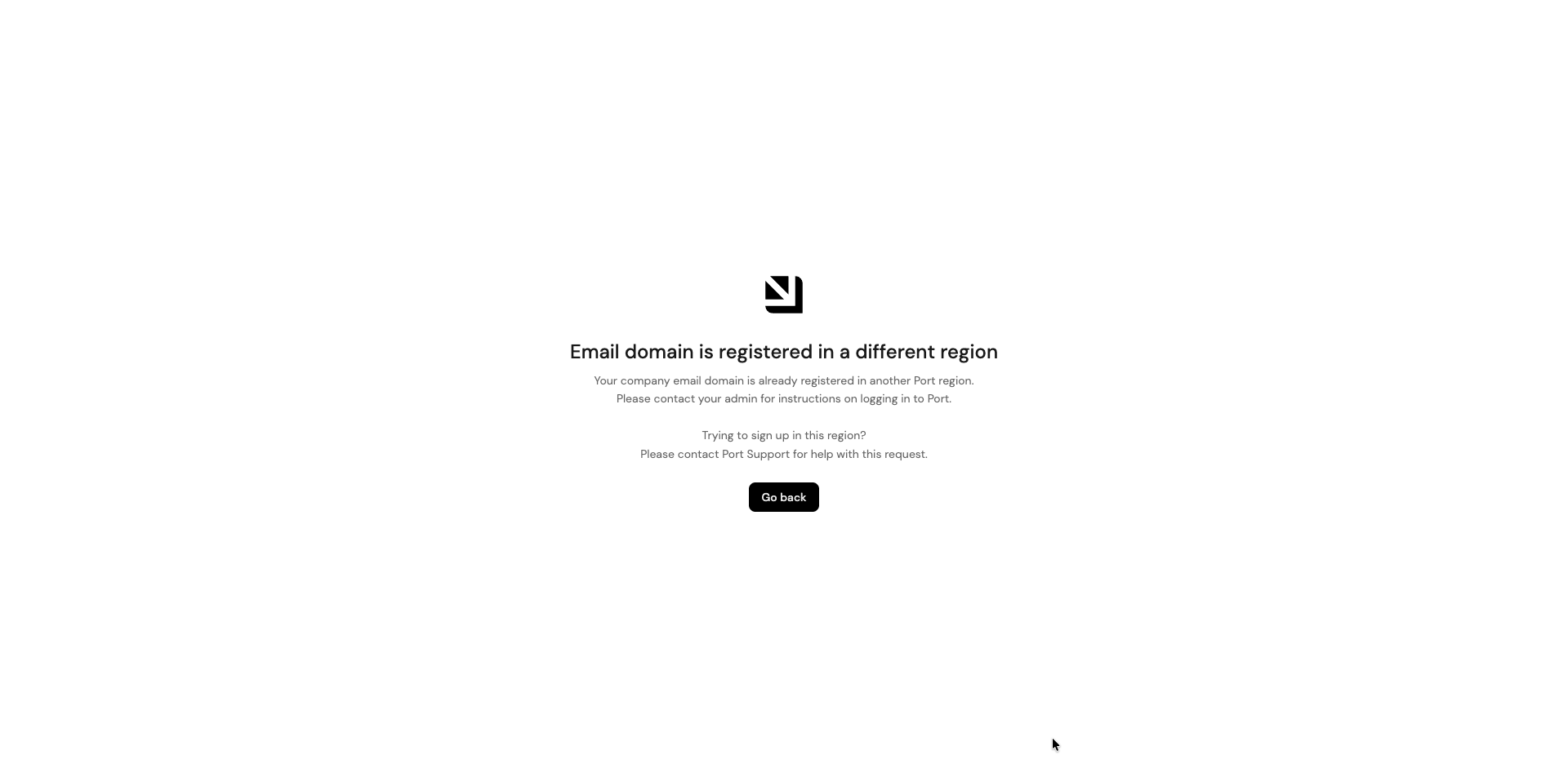
Protect verified domains across all login regions
Employees who reach the wrong regional login page now see a clear error instead of accidentally creating a duplicate account.
When a company verifies a domain in one region, employees who accidentally reach a different regional login page see an error message telling them their email domain is registered elsewhere and to contact IT for the correct login link.
New blueprint properties are hidden by default
New blueprint properties are now hidden by default across all views.
When you add a property via the +Property button in a catalog table, it appears only in that table and stays hidden everywhere else. Scorecard rule properties follow the same behavior. Existing setups are unaffected.
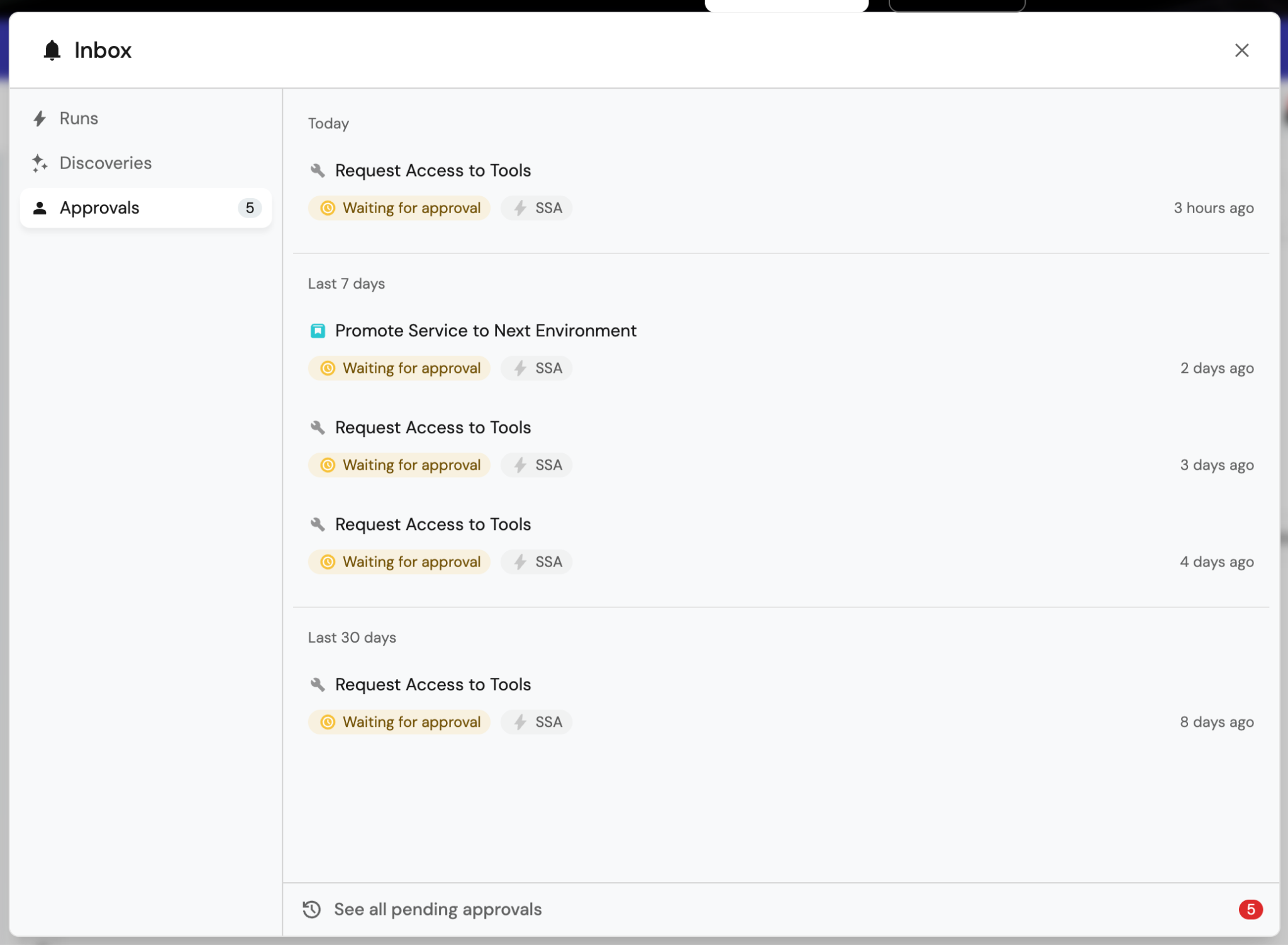
Navigate notifications with a new Inbox dialog
The Inbox now opens in a full dialog, giving notifications, approvals, and workflow runs a cleaner, more spacious experience.
Click the bell icon in the navigation bar as usual-everything works the same.
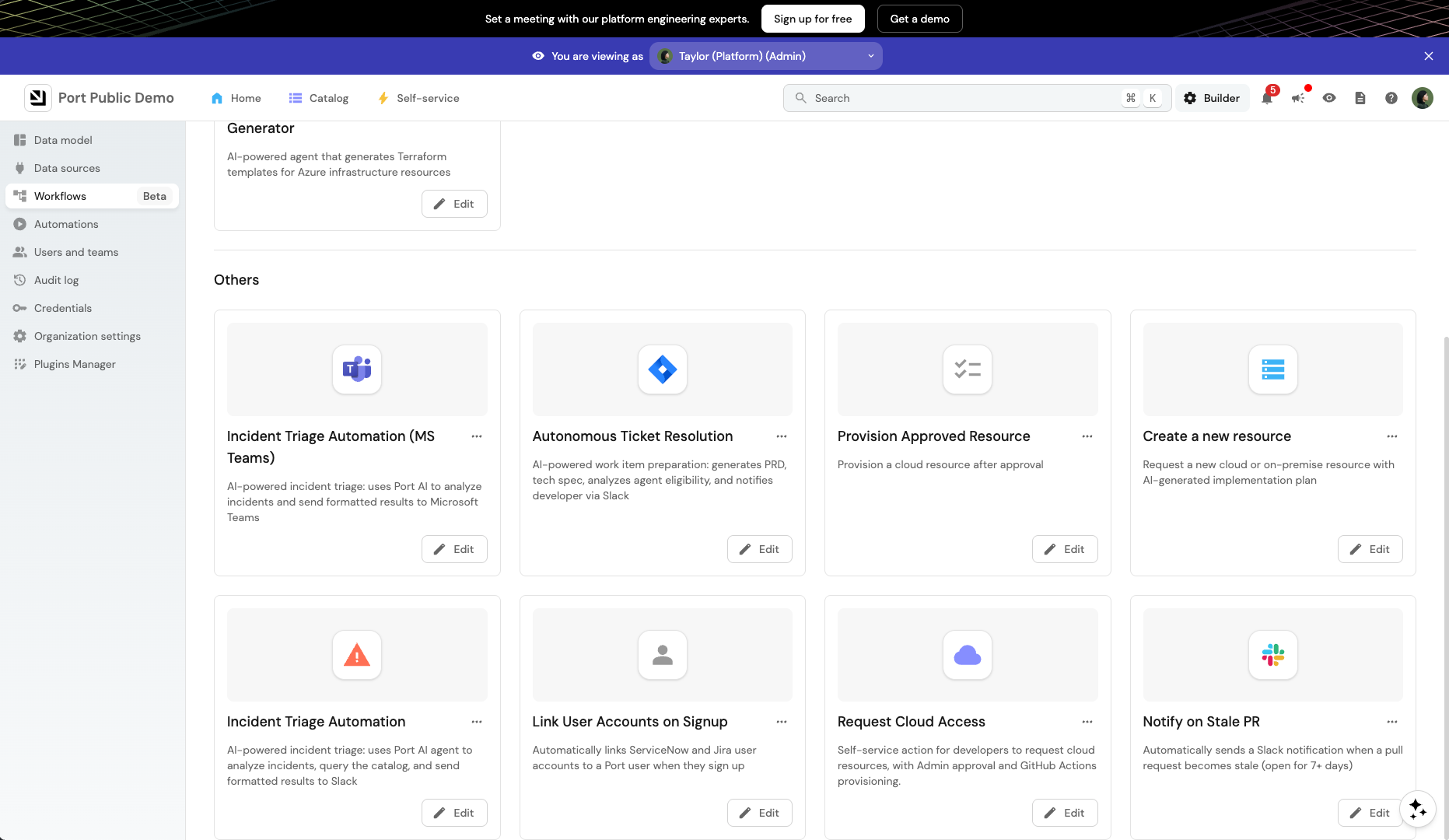
Explore Workflows end-to-end in Port's public demo
Workflows are now live in Port's public demo, so anyone can explore real flows before building in their own org.
Navigate to Self-Service or Workflows Builder to see how flows appear to end users and how they're structured behind the scenes.
Cursor pagination for the Action Runs API
The GET /v1/actions/runs endpoint now supports cursor-based pagination, letting integrations iterate through the full action run history regardless of volume.
Previously capped at 1,000 runs per request. Pass the next token from any response to fetch the next page, and continue until next is absent.
Redact secret values from the Port Execution Agent logs
Port Execution Agent now automatically redacts secrets and sensitive values from all logs - no configuration needed. You'll also see the agent version at startup and action run status updates throughout execution, so you always know what's running and what's happening.
Upgrade to Port Execution Agent to version v0.8.10 (Helm chart 0.8.15)
Track login activity and usage trends in the Usage Dashboard
New login logs and monthly usage aggregates give org admins a clear picture of platform adoption over time.
Drill into Detailed Login Logs to see every daily login with user email, organization ID, and date. Monthly Usage Aggregates let you track trends by comparing unique users versus total logins per organization.
Guides
- Techdocs: Manage and surface technical documentation in Port
- Incident.io integration guide (💬 announcement)
- Zapier integration guide (💬 announcement)
Integration updates
Track Claude Code and GitHub Copilot usage in Port Engineering Intelligence
Two new integrations let engineering teams measure the real impact of their AI coding tools (commits, PRs, token usage, and cost) directly in Port.
A new Claude AI integration syncs Claude Code activity into your Software Catalog, tracking the commits and PRs it created alongside token consumption and cost. The GitHub Copilot integration now also covers the Enterprise endpoint, so teams using Copilot outside the standard daily GitHub workflow are included in your metrics.


Get your survey template today
%201.svg)


Download your survey template today


Free Roadmap planner for Platform Engineering teams
Set Clear Goals for Your Portal
Define Features and Milestones
Stay Aligned and Keep Moving Forward
Create your Roadmap


Free RFP template for Internal Developer Portal
Creating an RFP for an internal developer portal doesn’t have to be complex. Our template gives you a streamlined path to start strong and ensure you’re covering all the key details.
Get the RFP template


Leverage AI to generate optimized JQ commands
test them in real-time, and refine your approach instantly. This powerful tool lets you experiment, troubleshoot, and fine-tune your queries—taking your development workflow to the next level.
Explore now
Check out Port's pre-populated demo and see what it's all about.
No email required
LIVE WEBINAR, Aug 18, 2026:
Context-aware Vibe Coding for Platform Engineering
Move fast while staying in control
Build governed agentic workflows on one central platform.
See it in action:
Watch this video on generating Terraform with Port, or explore our public demo.
.png)
Check out the 2025 State of Internal Developer Portals report
No email required
Minimize engineering chaos. Port serves as one central platform for all your needs.
Act on every part of your SDLC in Port.
Your team needs the right info at the right time. With Port's software catalog, they'll have it.
Learn more about Port's agentic engineering platform
Read the launch blog
Contact sales for a technical walkthrough of Port
Every team is different. Port lets you design a developer experience that truly fits your org.
As your org grows, so does complexity. Port scales your catalog, orchestration, and workflows seamlessly.
Port × n8n Boost AI Workflows with Context, Guardrails, and Control
Port Builders Session: A Single, Governed Interface for All MCP Servers
Book a demo right now to check out Port's developer portal yourself
Apply to join the Beta for Port's new Backstage plugin


n8n + Port templates you can use today
walkthrough of ready-to-use workflows you can clone
From manual to autonomous engineering
One platform to build, govern, and operate the Agentic SDLC.
Port is open for you to try it
build your first agentic workflow today