Navigating the EU’s Digital Operational Resilience Act (EU DORA)
Learn how the EU Digital Operational Resilience Act (DORA) affects engineering teams, what auditors expect for ICT asset inventory, incident response, and third-party risk, and how to turn weeks of audit prep into hours.


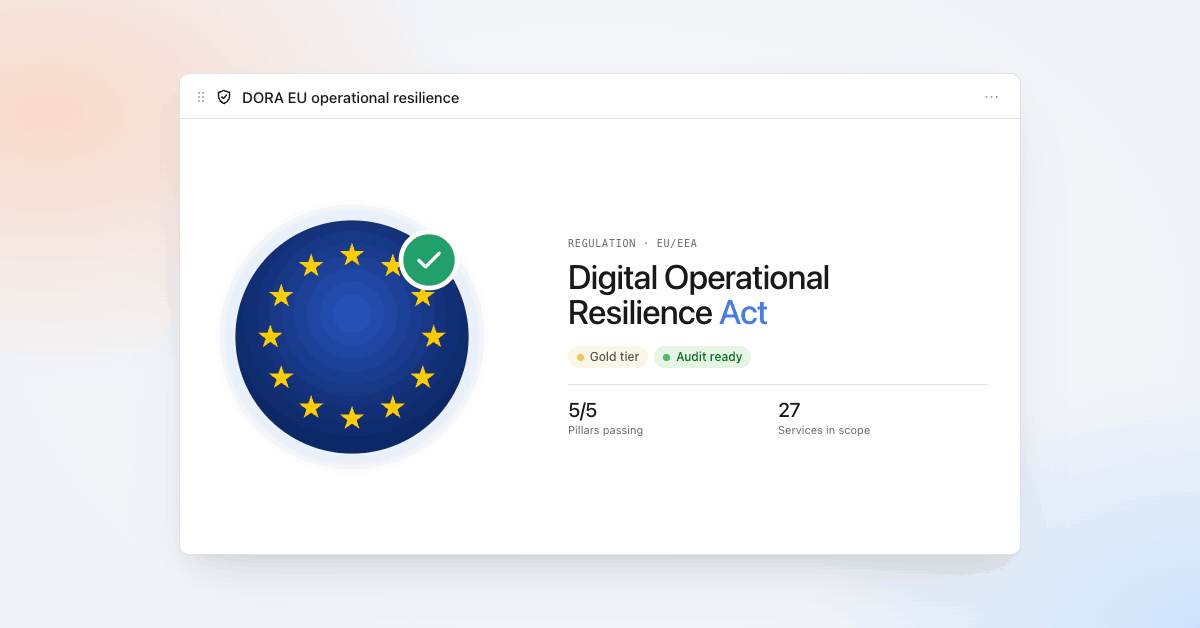
The EU Digital Operational Resilience Act (DORA) took effect on January 17, 2025. If your organization provides or operates technology for financial services in the EU, you’re required to prove that your software systems are documented, monitored, and resilient, or face fines of up to 2% of global annual revenue.
Most DORA compliance conversations start in the CISO’s office. But the burden of proof falls on the engineering teams who build and operate the systems. They’re the ones who need to show auditors: which services exist, who owns them, how failures are detected, and how quickly incidents are resolved.
That’s where Port comes in.
What DORA Actually Requires from Engineering Teams
DORA has five core pillars. Four of them have direct engineering implications:
Information and Communications Technology (ICT) risk management: You must maintain an up-to-date inventory of all your technology assets: services, APIs, infrastructure, third-party integrations, and dependencies. Auditors will ask you to produce this. If your answer is a mix of wiki pages, spreadsheets, and tribal knowledge, that’s a compliance gap.
Incident reporting: When a major ICT incident occurs, you must detect it quickly, contain it, and report it to regulators within strict timeframes (24 hours for initial notification, 72 hours for intermediate reports). That means your incident response process can’t be ad hoc.
Operational resilience testing: You must regularly test whether your systems can withstand and recover from disruptions. That includes proving that critical services have defined SLOs, runbooks, and on-call coverage.
ICT third-party risk management: You must document and monitor every third-party provider that touches your critical systems. If an external vendor has an outage, you need to know which of your services are affected and by how much.
All four of these require the same underlying thing: a real-time accurate picture of your entire software ecosystem and automated workflows that take action on that picture to ensure resiliency and smooth operations.
The Problem: Your Software Knowledge Is Scattered
Most engineering organizations don’t have that picture. Services are documented in Confluence, ownership lives in people’s heads, dependencies aren’t tracked, and nobody is sure which third-party services are considered “critical” under DORA’s definition.
When an auditor asks “show me all services that depend on your payment processing provider,” the answer usually involves Slacking five teams and waiting several days.
That’s not a documentation problem. It’s an architecture problem – and a business operation problem. You don’t have a single place where your software knowledge lives.
DORA Compliance Starts Here: Four engineering pillars, streamlined compliance out-of-the-box
Meeting DORA’s four engineering pillars requires four corresponding capabilities:
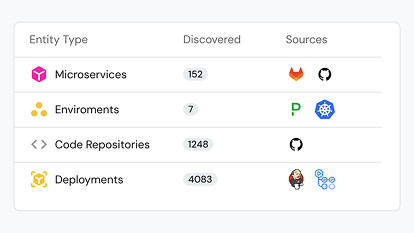
- A live ICT asset inventory that automatically stays current as your environment changes. Not a wiki page someone updates quarterly.
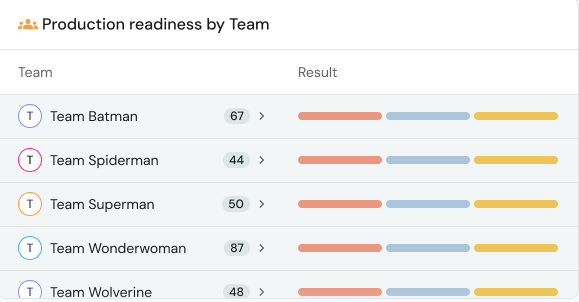
- Continuous standards enforcement that measures every service against defined operational criteria in real time and triggers remediation automatically when something falls out of compliance.
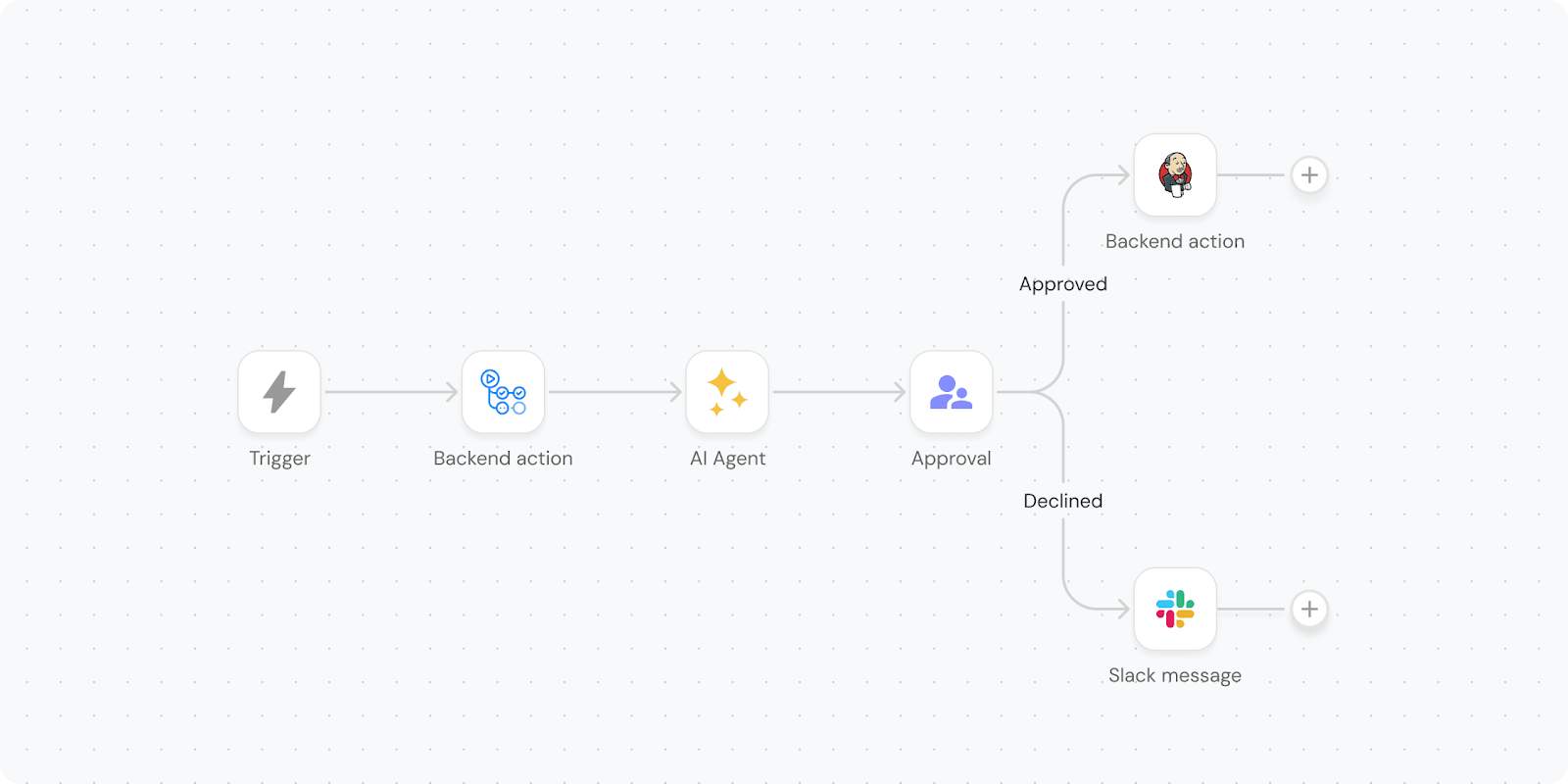
- Structured incident response workflows that connect your monitoring tools to a repeatable, auditable process. So detection, escalation, and reporting happen in minutes, not hours.
- Third-party dependency mapping that shows you exactly which services rely on which external providers, and what your blast radius is when one of them has an incident.
Most engineering organizations try to solve these with a combination of spreadsheets, wiki pages, and manual coordination between teams. That approach doesn’t scale, and it doesn’t satisfy DORA’s requirements for continuous, auditable compliance.
Port is the all-in-one platform that delivers all four. Here’s how it maps to each DORA pillar:
DORA Requires ICT Asset Inventory | Port Delivers Software Catalog
DORA Continuous Standards Enforcement | Port Delivers Scorecards
DORA Requires Structured Incident Response | Port Delivers Workflow Orchestrator
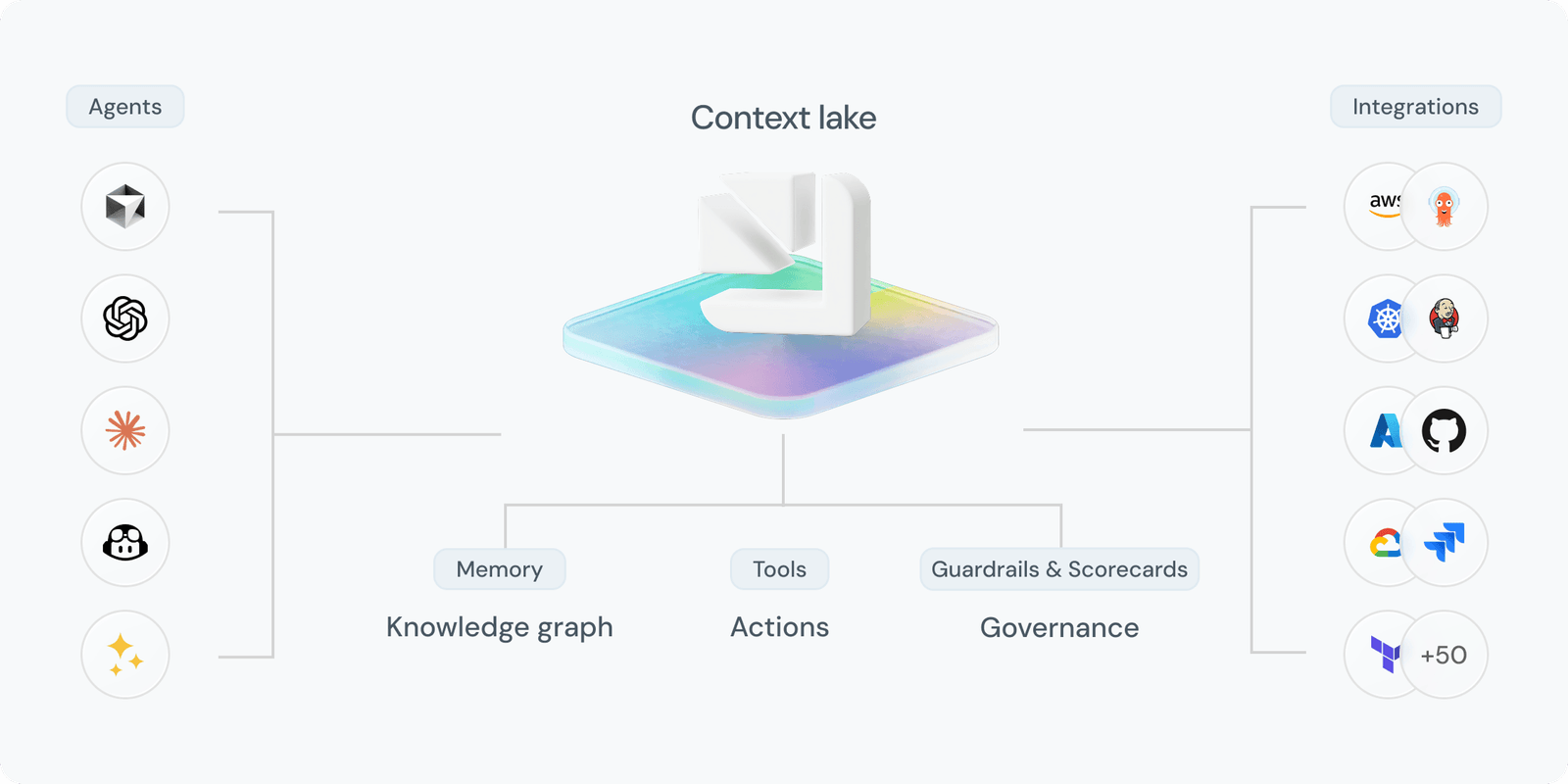
DORA Requires Third-Party Risk Visibility | Port Delivers Context Lake
What this looks like in practice
Imagine a mid-sized asset management firm preparing for a DORA audit in the EU. Before Port, their compliance process looked something like this:
- Compliance officer spends three weeks Slacking back and forth between engineering teams
- Spreadsheets are collected
- A service registry is manually assembled
- Ad hoc conversations, spreadsheets, service registry added to Wiki
- Wiki is circulated: all internal teams to review and confirm
A process that leaves a lot of room for errors and inevitably something is out of date by the time the auditor arrives.
After Port: a compliance officer opens a dashboard that shows all 400 services in production, sorted by criticality tier. Each service shows its DORA compliance score: does it have an owner, a runbook, a tested recovery plan, and documented third-party dependencies? Problematic services automatically have open tickets assigned to their owners. The audit preparation time drops from weeks to hours.
The Fundamental DORA Challenge
DORA doesn’t just ask you to document your systems once. It requires continuous evidence that your systems meet operational standards, that incidents are handled within defined timeframes, and that your dependencies are monitored and managed.
That’s impossible to do manually at scale. Especially given the growing complexity of our applications, systems, and dependencies. It requires a platform that:
- Automatically catalogs your software ecosystem
- Continuously measures it against defined standards
- Automatically triggers action when standards aren’t met
- Creates a complete, auditable record of your compliance posture.
That’s Port.
Getting started
Port integrates with the tools your engineering teams already use: GitHub, Jira, PagerDuty, Datadog, AWS, Kubernetes, Wiz, and more.
If you’re a financial services’ engineering leader building toward DORA compliance, or an IT leader tasked with ensuring visibility and governance across your entire application inventory, schedule a demo or try Port yourself to see how the platform can help you achieve DORA and other standards compliance.


Get your survey template today
%201.svg)


Download your survey template today


Free Roadmap planner for Platform Engineering teams
Set Clear Goals for Your Portal
Define Features and Milestones
Stay Aligned and Keep Moving Forward
Create your Roadmap


Free RFP template for Internal Developer Portal
Creating an RFP for an internal developer portal doesn’t have to be complex. Our template gives you a streamlined path to start strong and ensure you’re covering all the key details.
Get the RFP template


Leverage AI to generate optimized JQ commands
test them in real-time, and refine your approach instantly. This powerful tool lets you experiment, troubleshoot, and fine-tune your queries—taking your development workflow to the next level.
Explore now
Check out Port's pre-populated demo and see what it's all about.
No email required
LIVE WEBINAR, Aug 18, 2026:
Context-aware Vibe Coding for Platform Engineering
Thursday, October 22 12:00pm EDT⋅6:00pm CET
To learn more about the new capability and to see a live demo, join our upcoming community session with GitHub
Move fast while staying in control
Build governed agentic workflows on one central platform.
See it in action:
Watch this video on generating Terraform with Port, or explore our public demo.
.png)
Check out the 2025 State of Internal Developer Portals report
No email required
Minimize engineering chaos. Port serves as one central platform for all your needs.
Act on every part of your SDLC in Port.
Your team needs the right info at the right time. With Port's software catalog, they'll have it.
Learn more about Port's agentic engineering platform
Read the launch blog
Contact sales for a technical walkthrough of Port
Every team is different. Port lets you design a developer experience that truly fits your org.
As your org grows, so does complexity. Port scales your catalog, orchestration, and workflows seamlessly.
Port × n8n Boost AI Workflows with Context, Guardrails, and Control
Port Builders Session: A Single, Governed Interface for All MCP Servers
Book a demo right now to check out Port's developer portal yourself
Apply to join the Beta for Port's new Backstage plugin


n8n + Port templates you can use today
walkthrough of ready-to-use workflows you can clone
From manual to autonomous engineering
One platform to build, govern, and operate the Agentic SDLC.
Port is open for you to try it
build your first agentic workflow today

.png)