How SPS Commerce built an AI Software Factory on Port
SPS built an agentic ticket workflow on Port that takes Jira tickets from planning to pull request, combining AI agents with developer approvals to scale engineering work


.jpg)
To move toward an AI software factory, SPS used Port as its foundation to bring agents, developers, context, and workflows together across the SDLC.
SPS Commerce (NASDAQ:SPSC) is the world's largest retail network, connecting roughly 50,000 retailers, suppliers, and logistics companies and powering more than $650 billion in annual transactions. Hundreds of engineers keep that network running across more than 3,000 services, supported by a developer productivity engineering team of about five people that owns SPS's Port implementation.
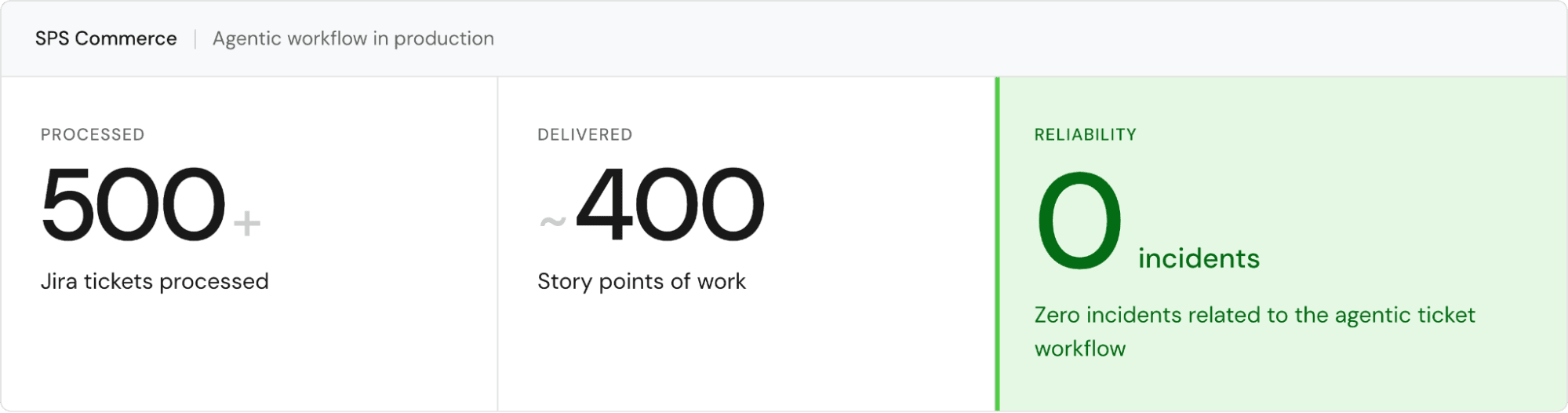
In its first four months after launching its first agentic ticket workflow, SPS processed more than 500 Jira tickets with zero incidents.
How did they get there?
What did it take for SPS to move from isolated agents to a software factory?
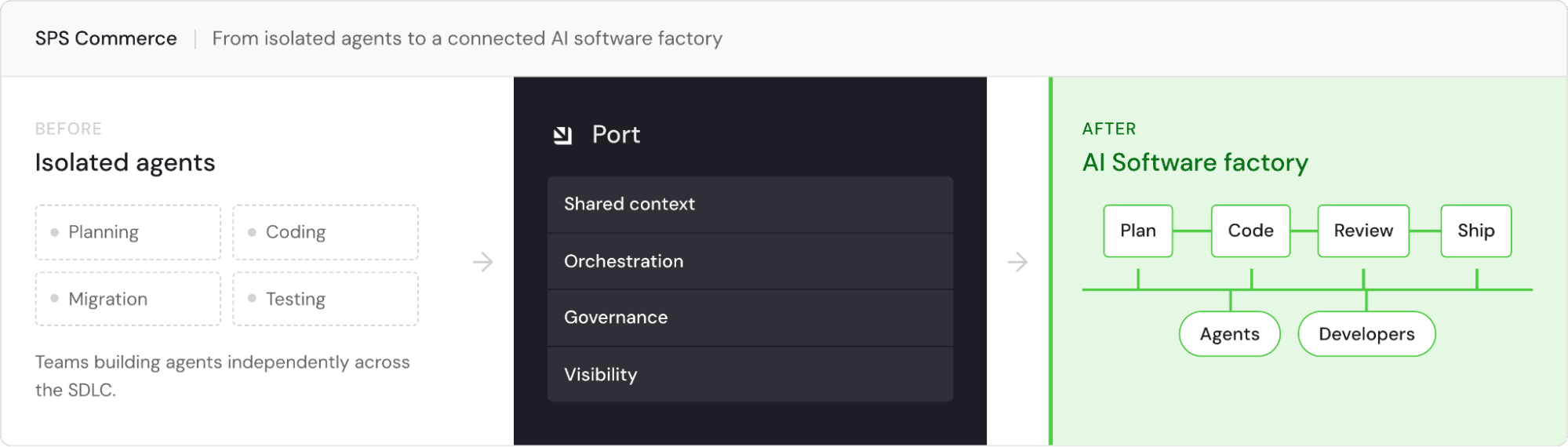
As AI coding tools took hold, SPS teams started building their own agents for coding, planning, and migrations. Each agent handled a part of the SDLC, but the agents weren't connected to each other or to the processes developers already followed.
To move from isolated agents to a software factory, SPS needed a way to connect agents into cohesive workflows, give them access to the same context as developers, and maintain visibility and control across the SDLC.
How did Port become the horizontal foundation for SPS’s software factory?
SPS chose Port as the foundation for its AI software factory. Port already brought together data from the tools SPS developers use every day, including Jira, Azure DevOps, and Kubernetes, so agents could work from the same context as the developers reviewing their output. Port also provided the orchestration to connect agents into workflows, governance to maintain control, and visibility to track what was happening across the SDLC.
What does an agentic workflow look like inside SPS’s software factory?
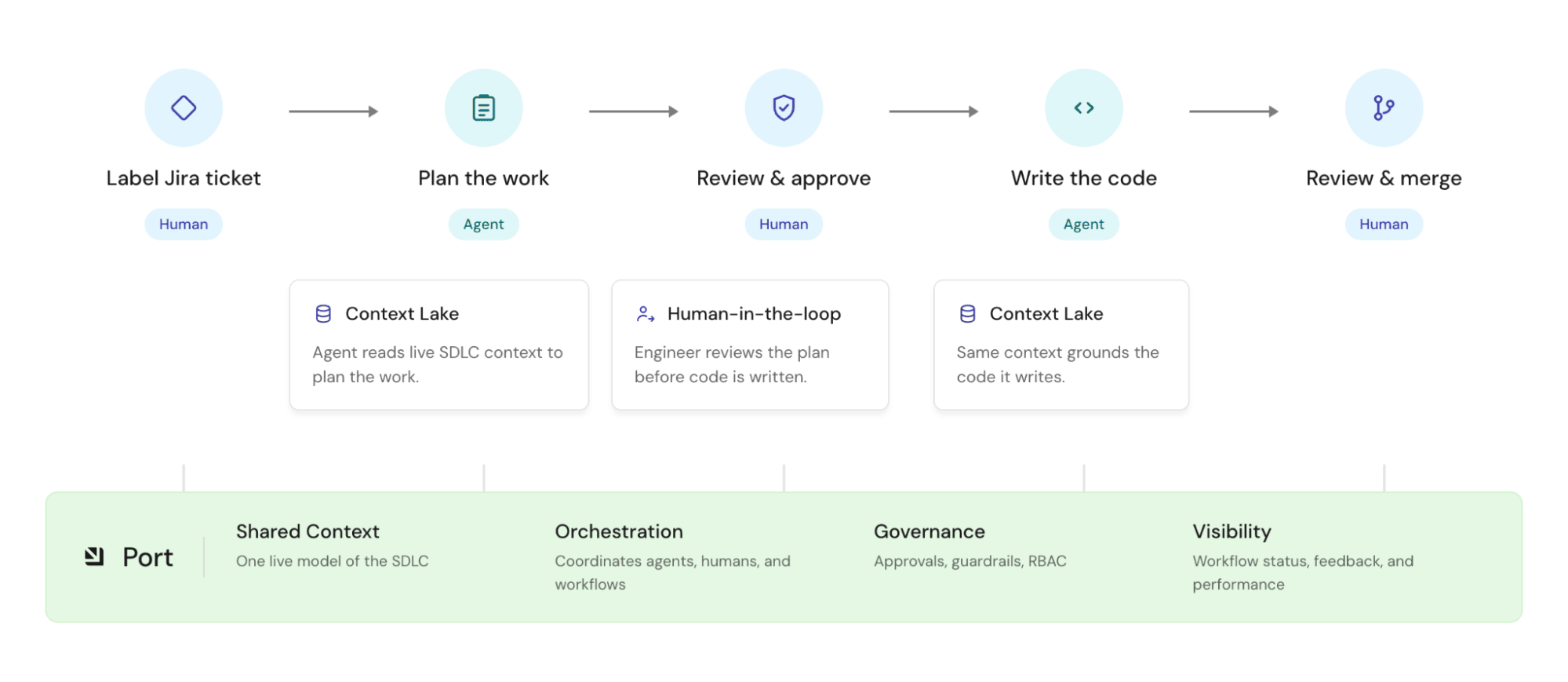
SPS designed its first workflow the way it would onboard a junior engineer. Agents draft plans and write code, and developers review the work at the points where a senior engineer would normally step in: before implementation and before merge.
Here's how it runs in practice. A developer labels a Jira ticket, and Port sends it to a planning agent. The agent drafts an implementation plan using Port's Context Lake. The developer reviews the plan and approves it through a Port self-service action. Port then hands the plan to a coding agent, which writes the code and opens a pull request in GitHub. The developer reviews and merges the PR. Along the way, Port posts status updates to Slack and dashboards and collects feedback to help SPS understand where agents are performing well and where they need improvement.
What results is SPS seeing from its AI software factory?
- 500+ Jira tickets processed through SPS’s agentic ticket workflow
- ~400 story points of work processed
- Zero incidents related to the workflow
- More than 50% of developers who used the workflow reported it as helpful, demonstrating early adoption in the new way of working
Human approval remained built into the workflow even as agentic work scaled, allowing SPS to increase the amount of work handled by agents while keeping developers accountable for the outcome.
Watch the video:
In this short video, Mark shares how SPS built its first agentic workflow in Port, how developers and agents work together across the SDLC, and how the team is expanding the model into a broader AI software factory.
"We've seen over 500 tickets get processed in the first four months since we released it, and that accounted for over 400 points worth of work. But I think more important for leaders and everyone on the team was we had zero incidents from this as well." Mark DeBeer, Lead Software Engineer, SPS Commerce
Summary
SPS is turning isolated AI agents into a connected software factory, with Port providing the shared context, orchestration, governance, and visibility needed to operate agentic workflows across the SDLC. The first ticket workflow has already processed more than 500 Jira tickets with zero incidents, and SPS is now expanding the model into additional use cases across the development lifecycle.
Read the full case study to learn more about how SPS built its AI software factory on Port and where it's expanding next.


Get your survey template today
%201.svg)


Download your survey template today


Free Roadmap planner for Platform Engineering teams
Set Clear Goals for Your Portal
Define Features and Milestones
Stay Aligned and Keep Moving Forward
Create your Roadmap


Free RFP template for Internal Developer Portal
Creating an RFP for an internal developer portal doesn’t have to be complex. Our template gives you a streamlined path to start strong and ensure you’re covering all the key details.
Get the RFP template


Leverage AI to generate optimized JQ commands
test them in real-time, and refine your approach instantly. This powerful tool lets you experiment, troubleshoot, and fine-tune your queries—taking your development workflow to the next level.
Explore now
Check out Port's pre-populated demo and see what it's all about.
No email required
LIVE WEBINAR, Aug 18, 2026:
Context-aware Vibe Coding for Platform Engineering
Thursday, October 22 12:00pm EDT⋅6:00pm CET
To learn more about the new capability and to see a live demo, join our upcoming community session with GitHub
Move fast while staying in control
Build governed agentic workflows on one central platform.
See it in action:
Watch this video on generating Terraform with Port, or explore our public demo.
.png)
Check out the 2025 State of Internal Developer Portals report
No email required
Minimize engineering chaos. Port serves as one central platform for all your needs.
Act on every part of your SDLC in Port.
Your team needs the right info at the right time. With Port's software catalog, they'll have it.
Learn more about Port's agentic engineering platform
Read the launch blog
Contact sales for a technical walkthrough of Port
Every team is different. Port lets you design a developer experience that truly fits your org.
As your org grows, so does complexity. Port scales your catalog, orchestration, and workflows seamlessly.
Port × n8n Boost AI Workflows with Context, Guardrails, and Control
Port Builders Session: A Single, Governed Interface for All MCP Servers
Book a demo right now to check out Port's developer portal yourself
Apply to join the Beta for Port's new Backstage plugin


n8n + Port templates you can use today
walkthrough of ready-to-use workflows you can clone
From manual to autonomous engineering
One platform to build, govern, and operate the Agentic SDLC.
Port is open for you to try it
build your first agentic workflow today