What does Xirp do? Key features, use cases, and alternatives
Xirp is Spotify's app for running AI coding agents in parallel sessions. What it does, when to use it, and the main alternatives.



TL;DR: Xirp is Spotify's agentic development environment, a macOS app that runs coding agents like Claude Code, Codex, and Gemini across parallel sessions on a developer's machine. Connected to Spotify Portal, each session starts with context from your software catalog, and you can switch between agents mid-task without losing the thread. It is a strong tool for one way of working, AI-assisted engineering, where a person opens each session and drives the agents. An Agentic SDLC Platform serves the next one, AI-led engineering, where events start the work and agents run across the lifecycle under governance. The two are stages of the same shift rather than competitors, and a maturing organization runs both.
This piece is written for engineers and engineering leaders working through these questions:
- What does Xirp do?
- When does a developer use Xirp?
- What is the difference between AI-assisted and AI-led engineering?
- What is the difference between Xirp and an Agentic SDLC Platform?
- How do Xirp and an Agentic SDLC Platform fit together?
- Where should you start?
What is Xirp?
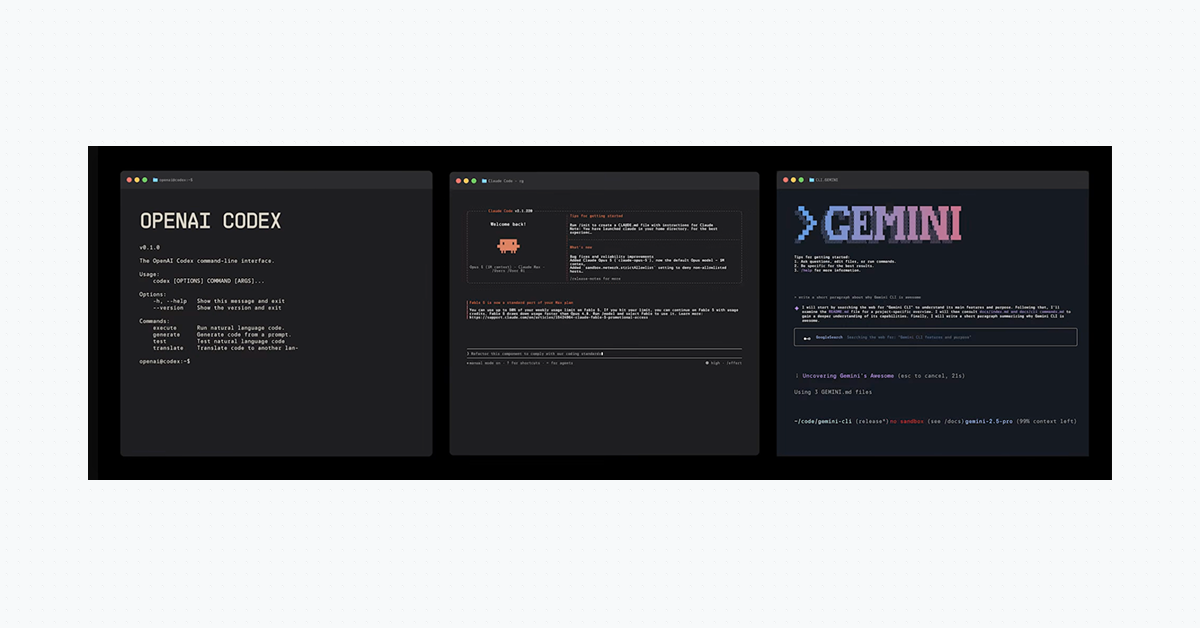
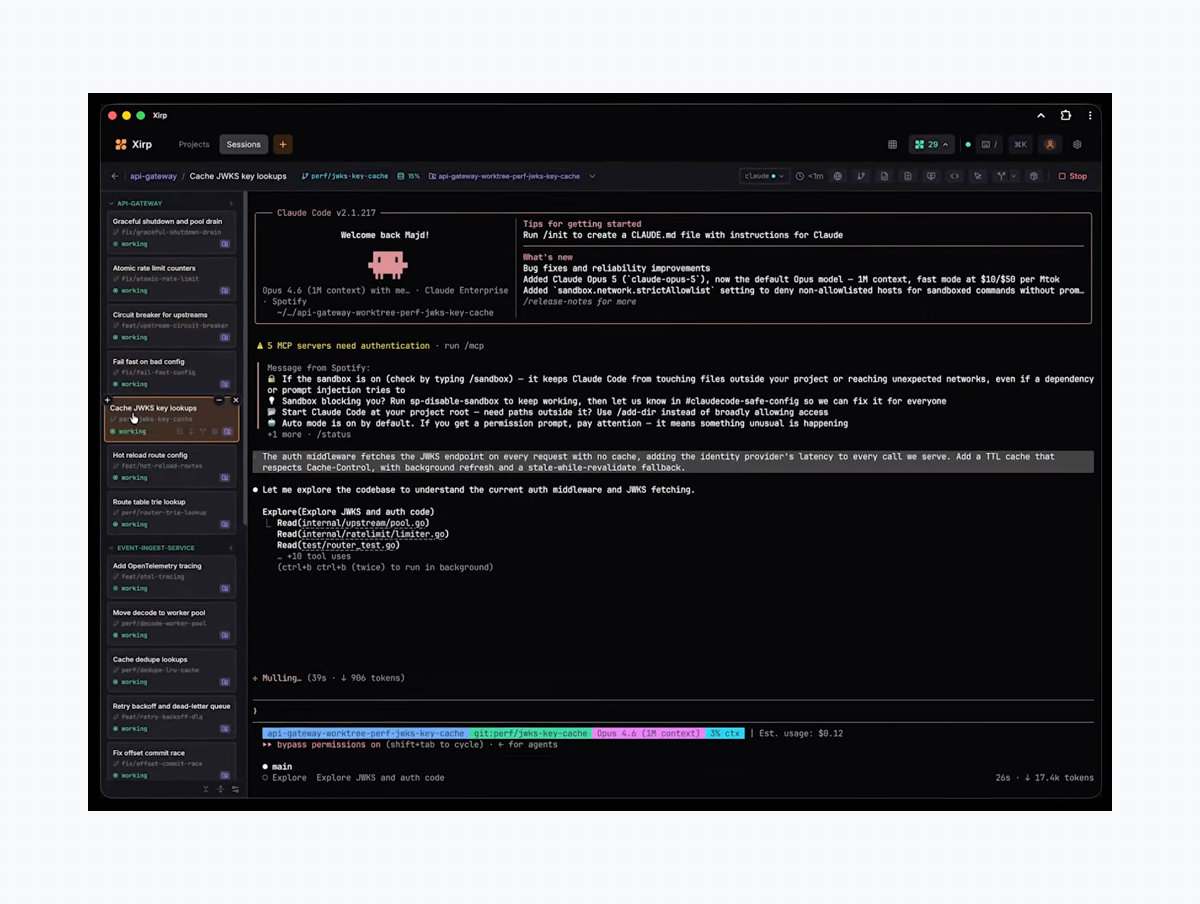
Xirp is a desktop app that manages AI coding agents across many sessions at once. Spotify opened it to public beta on August 10, 2026, after more than 1,300 of its own engineers had run over 36,000 sessions on it internally. It runs Claude Code, Codex, and Gemini in persistent terminal sessions, gives each task its own git worktree so dozens of agents can work in parallel without colliding, and lets an engineer switch the agent mid-task while keeping the full context of the session.
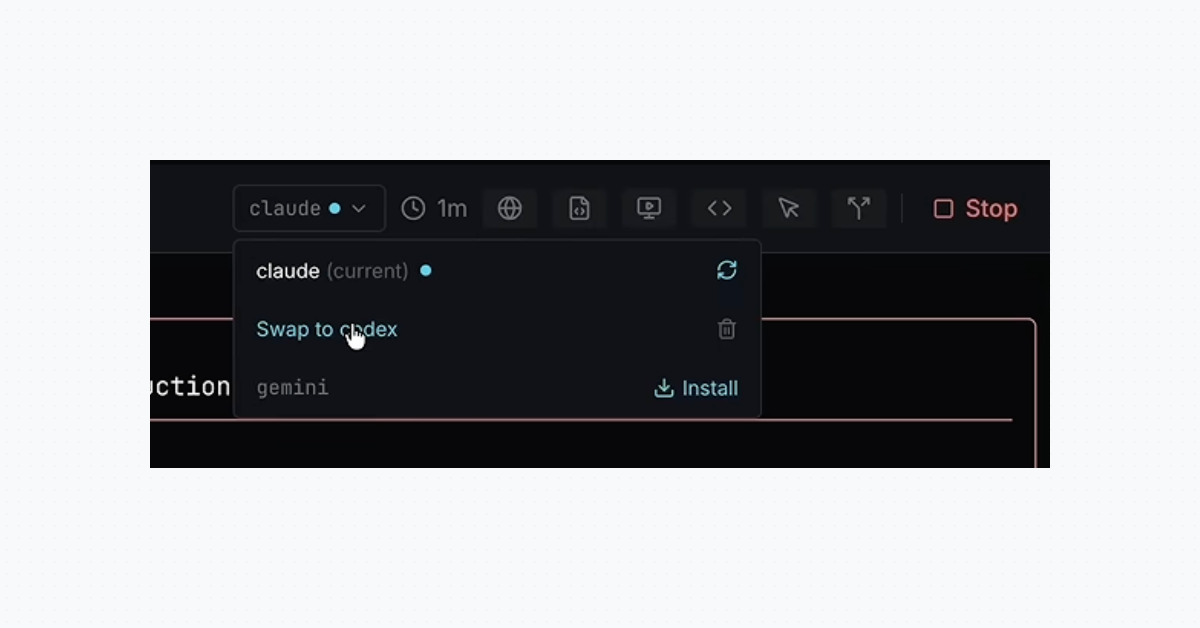
It does not replace your coding agent or your source control, and you still authenticate each agent through its own CLI. If you have used Conductor or a terminal multiplexer to juggle agents, the shape will feel familiar. On its own, Xirp is a cockpit for one engineer's sessions, and it is a good one.
Additional value comes when you connect it to Spotify Portal, the commercial product Spotify built on Backstage. Portal holds the software catalog, so when Xirp connects to it, every session starts with the component, ownership, and dependency context from that catalog, delivered to the agent over MCP. When a session ends, the transcript flows back into Portal for others to pick up. Spotify's own framing is that the agent becomes interchangeable and the context becomes the product, the same bet it made when it open-sourced Backstage and sold Portal on top.
.png)
What problem does Xirp solve?
Xirp solves the problem of one engineer drowning in agent sessions. As soon as a developer runs more than one or two agents, context that belongs in one session piles up in another, institutional knowledge scatters into personal CLAUDE.md files and prompt libraries, and agents burn tokens rediscovering what another session already worked out.
Three moments capture what most teams feel today, before a tool like this:
- Every agent session starts blind. It does not know which service it is touching, who owns it, or what depends on it, so it makes changes that are technically fine and operationally wrong, and a human catches them in review.
- Your agents move only as fast as the engineer watching them. They run on that person's laptop a handful at a time, so throughput is capped by human attention.
- Every team rebuilds the same agent setup from scratch. Skills, rules, and MCP configs live in private files, so nothing compounds across the organization, and every new engineer or agent reconstructs context that already exists somewhere.
How does Xirp solve it?
Xirp closes two of those three.
It fixes the blind start by connecting Portal, which gives each session catalog context , so an agent begins knowing the service, its owners, and its dependencies instead of guessing.
It fixes the rebuilding by turning per-session skills and MCP configs into a shared marketplace in Portal and capturing each transcript as living documentation that updates as the work happens.
Alongside that, the grid view runs several agents side by side, and two features stand out: forking a running session so the clone keeps its full context, and switching the agent mid-task from Claude Code to Codex without losing the thread.
The throughput ceiling is the one that stays, and it stays for a reason. Xirp lifts how much a single engineer delivers, but the work still runs in sessions that person opens and supervises, so throughput still rises with that one person's throughput.
That is not a gap Xirp left open. It is what AI-assisted engineering is. The next section explains what it takes to become AI-Led.
AI-assisted engineering is not AI-led engineering, and why you need both
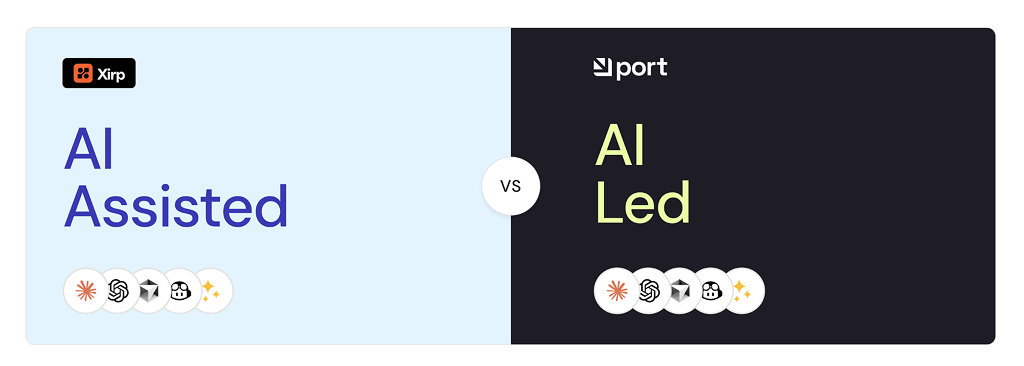
In assisted engineering a person opens a session, supervises the agent, and owns the result, so throughput rises and falls with human attention.
Xirp and Portal are a strong way to run the assisted model, and the led model is the next step.
In AI led engineering an event starts the work (new ticket, new incident, new vulnerability), agents act under guardrails, and people set the rules and review the outcomes.
Every action performed by AI is checked the moment it happens. Each agent and tool carries its own identity and scope and runs against your standards as it acts, so a destructive change is blocked before it lands rather than caught later in review.
In AI led engineering, agents are managed centrally, in registries the organization owns. You can see every agent, skill, and MCP server in use, certify the ones that meet your standards, and retire the ones that do not, which is what keeps a growing fleet from turning into agent sprawl across hundreds of laptops.
An Agentic SDLC Platform is built around these principles. It does not replace Xirp. It serves the next evolutionary phase of engineering after AI-Assisted.
How the two fit together, and where to start
In practice most teams run both, and which one you lean on depends on where you are. To make individual engineers faster at driving agents on their machines, a strong agentic development environment like Xirp is a reasonable choice. To become AI-Led, you add an Agentic SDLC Platform, and often they run side by side as the organization transforms from Assisted to Led engineering.
Teams already run Port as their Agentic SDLC Platform to become AI-Led.
dLocal, the payments company that clears more than 500 million transactions a month across more than 40 emerging markets, built an agent called dCoder on Port that takes a ticket from scope to a deployed PR by pulling the services, owners, and team patterns it needs straight from Port. Their CTO, Alberto Almeida, says the agent now handles 45% of all their tickets, and Port is where he watches its work and its rejection rate. That is the AI led model in one sentence: an event creates a ticket, an agent acts on it under governance, and no one opens a session to make it happen.
GitHub runs Port as the single source of truth for its engineering data, moving its security, privacy, and accessibility scorecards into Port to serve agents across the SDLC.
The fastest way to learn more is to start on the free plan and build a real proof of concept, or book a live demo with our team.
FAQ
What does Xirp do?
Xirp is Spotify's agentic development environment, a macOS app that runs and manages AI coding agents like Claude Code, Codex, and Gemini across parallel sessions, each in its own git worktree. Connected to Spotify Portal, each session starts with organizational context from the software catalog.
What is the difference between AI-assisted and AI-led engineering?
In AI-assisted engineering a person opens a session, drives the agent, and owns the result, so output scales with human attention. In AI-led engineering an event starts the work, agents act under governance, and people set the rules and review outcomes, so output scales with agents rather than with how many sessions someone can supervise. Xirp is built for the first and an Agentic SDLC Platform for the second, and most teams run both as they mature.
Is Xirp free?
Xirp is free during its public beta on macOS. The context that makes it useful for an organization comes from Spotify Portal, which is sold through contact-sales, so Portal's cost is not listed publicly.
Is Xirp an Agentic SDLC Platform?
No. Xirp is a session cockpit for driving agents on a developer's machine. An Agentic SDLC Platform runs agents server-side across the lifecycle, governs each action as it happens, and keeps a governed record agents can act on. Xirp works the session layer, not the platform layer.
What is an Agentic SDLC Platform?
It is the control plane agents run on across the software lifecycle. At a minimum it gives every agent and tool an identity, grounds decisions in a governed context layer, scopes what each agent can touch, checks every action against your standards as it happens, keeps every agent, skill, and MCP in a registry the organization governs, and maintains an audit trail you can query.
What are the alternatives to Xirp?
For the session-runner job, alternatives include other agent orchestration tools like Conductor and terminal multiplexers. For the platform job, the category to evaluate is the Agentic SDLC Platform, of which Port is one example.
Do I need both Xirp and an Agentic SDLC Platform?
Most maturing teams end up running both. Xirp makes individual engineers faster at driving agents on their machines. An Agentic SDLC Platform like Port runs governed agents across the lifecycle without a person in every loop. A session tool runs inside the platform, so this is a progression from assisted to led rather than a choice between the two.
Does Port replace Backstage?
No. Port integrates with Backstage. Backstage's catalog can feed Port's Context Lake and its scaffolder can feed Port's workflows, which is why teams run them together.


Get your survey template today
%201.svg)


Download your survey template today


Free Roadmap planner for Platform Engineering teams
Set Clear Goals for Your Portal
Define Features and Milestones
Stay Aligned and Keep Moving Forward
Create your Roadmap


Free RFP template for Internal Developer Portal
Creating an RFP for an internal developer portal doesn’t have to be complex. Our template gives you a streamlined path to start strong and ensure you’re covering all the key details.
Get the RFP template


Leverage AI to generate optimized JQ commands
test them in real-time, and refine your approach instantly. This powerful tool lets you experiment, troubleshoot, and fine-tune your queries—taking your development workflow to the next level.
Explore now
Check out Port's pre-populated demo and see what it's all about.
No email required
LIVE WEBINAR, Aug 18, 2026:
Context-aware Vibe Coding for Platform Engineering
Thursday, October 22 12:00pm EDT⋅6:00pm CET
To learn more about the new capability and to see a live demo, join our upcoming community session with GitHub
Move fast while staying in control
Build governed agentic workflows on one central platform.
See it in action:
Watch this video on generating Terraform with Port, or explore our public demo.
.png)
Check out the 2025 State of Internal Developer Portals report
No email required
Minimize engineering chaos. Port serves as one central platform for all your needs.
Act on every part of your SDLC in Port.
Your team needs the right info at the right time. With Port's software catalog, they'll have it.
Learn more about Port's agentic engineering platform
Read the launch blog
Contact sales for a technical walkthrough of Port
Every team is different. Port lets you design a developer experience that truly fits your org.
As your org grows, so does complexity. Port scales your catalog, orchestration, and workflows seamlessly.
Port × n8n Boost AI Workflows with Context, Guardrails, and Control
Port Builders Session: A Single, Governed Interface for All MCP Servers
Book a demo right now to check out Port's developer portal yourself
Apply to join the Beta for Port's new Backstage plugin


n8n + Port templates you can use today
walkthrough of ready-to-use workflows you can clone
From manual to autonomous engineering
One platform to build, govern, and operate the Agentic SDLC.
Port is open for you to try it
build your first agentic workflow today

.png)